First light
The universe expands, cools, and begins making the elements.
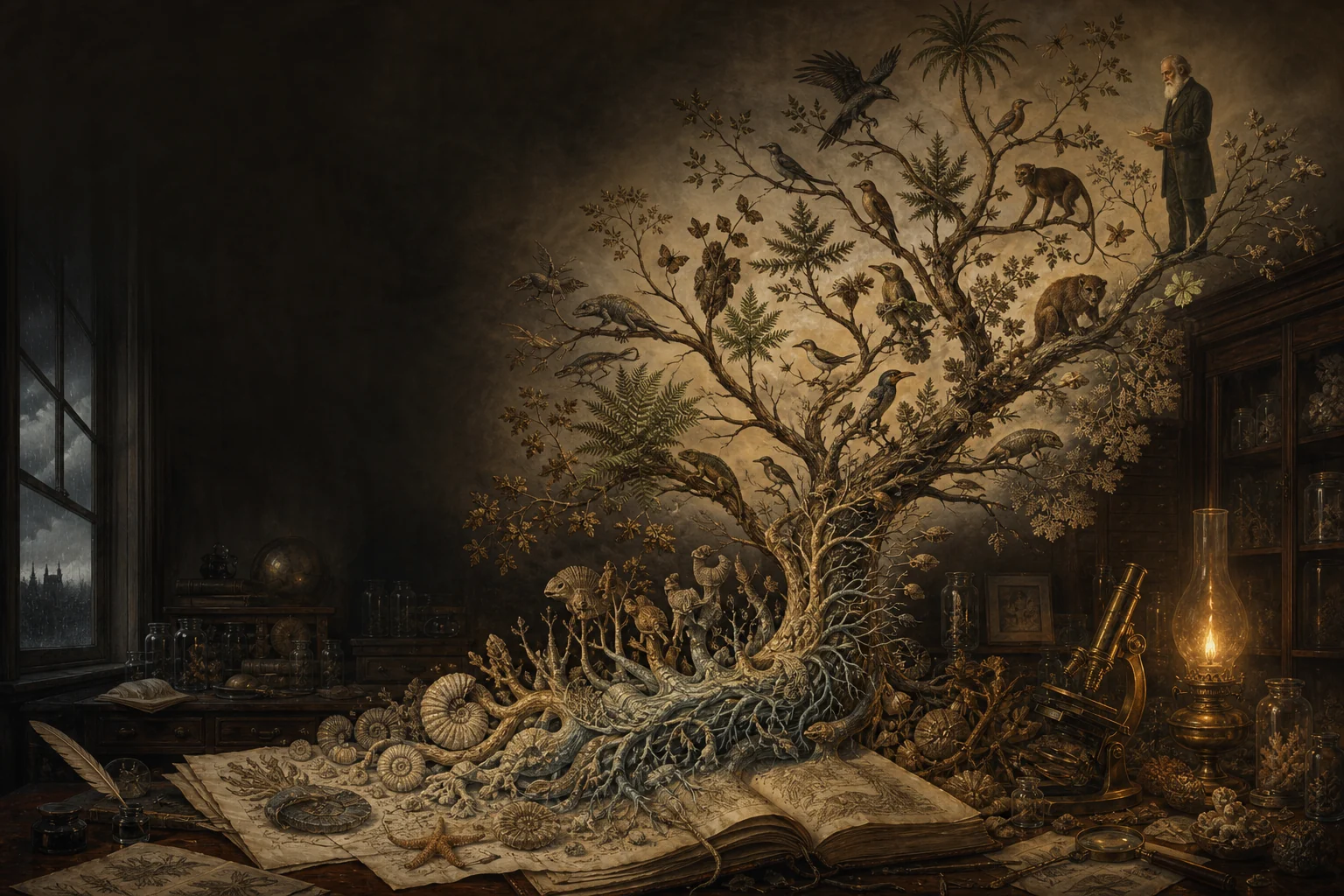
A field atlas of life on Earth · Est. 1859 / Reconsidered today
Follow 13.8 billion years from first light to the branching abundance of life—and the voyage that taught us how to see the connections.
Enter deep time↓A living encyclopedia of descent with modification
The history of life occupies only the final fraction of cosmic time. Yet within that fraction, matter learned to copy, vary, compete, cooperate—and evolve.
Open the complete deep-time atlas↗The universe expands, cools, and begins making the elements.
A restless rocky planet gathers around a young Sun.
Microbial ecosystems alter seas, rocks, and atmosphere.
Complex bodies diversify through Cambrian seas.
Fins, limbs, lungs, and landscapes enter a new relationship.
One dinosaur lineage carries its ancestry into the sky.
Surviving birds and mammals radiate into emptied ecologies.
One young twig learns to read the history of the whole tree.
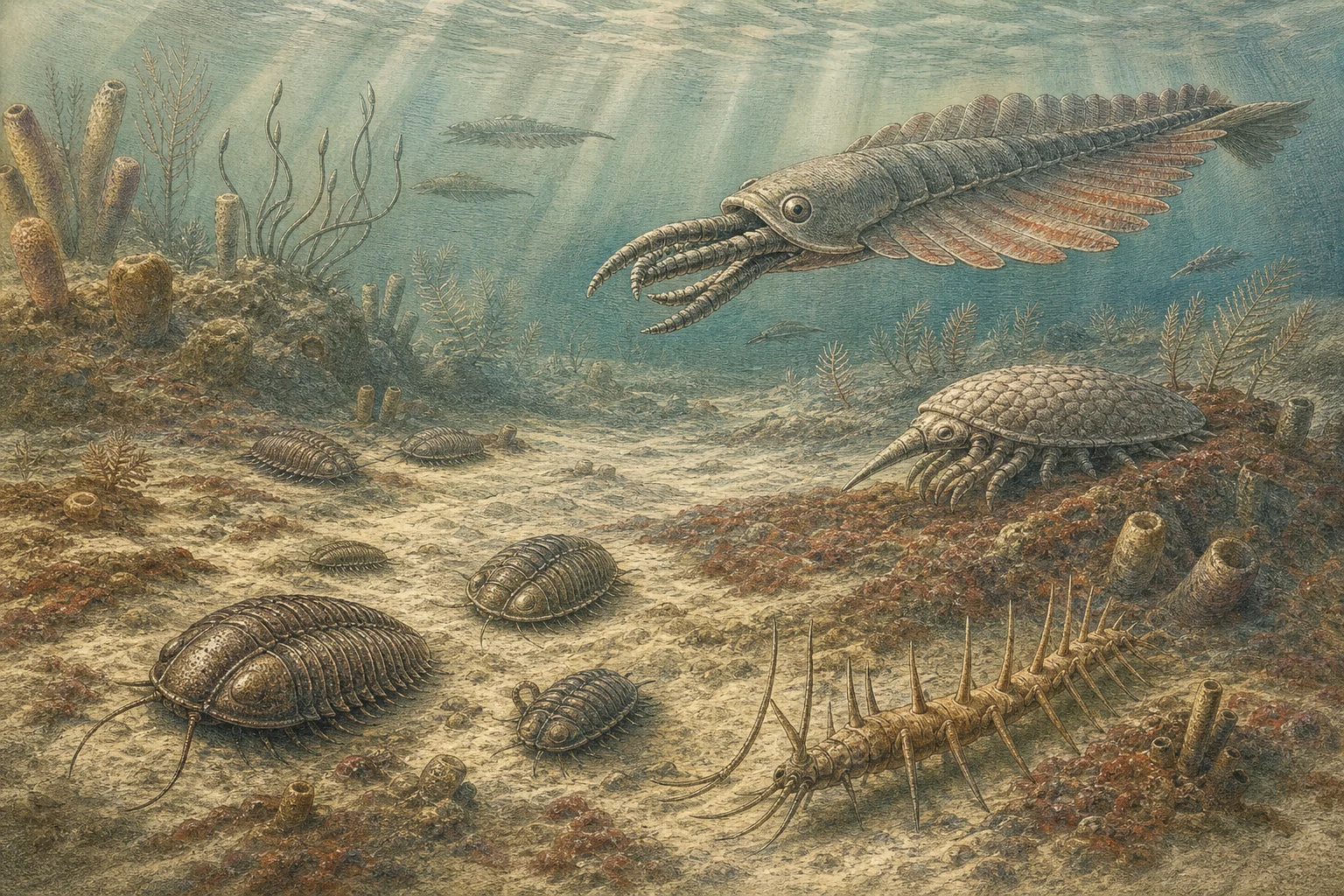
Cambrian Period
Eyes, armor, grasping limbs, guts, burrows: evolution explores the architecture of animals. The “explosion” was not an instant, but a geologically rapid expansion of forms and ecological relationships.
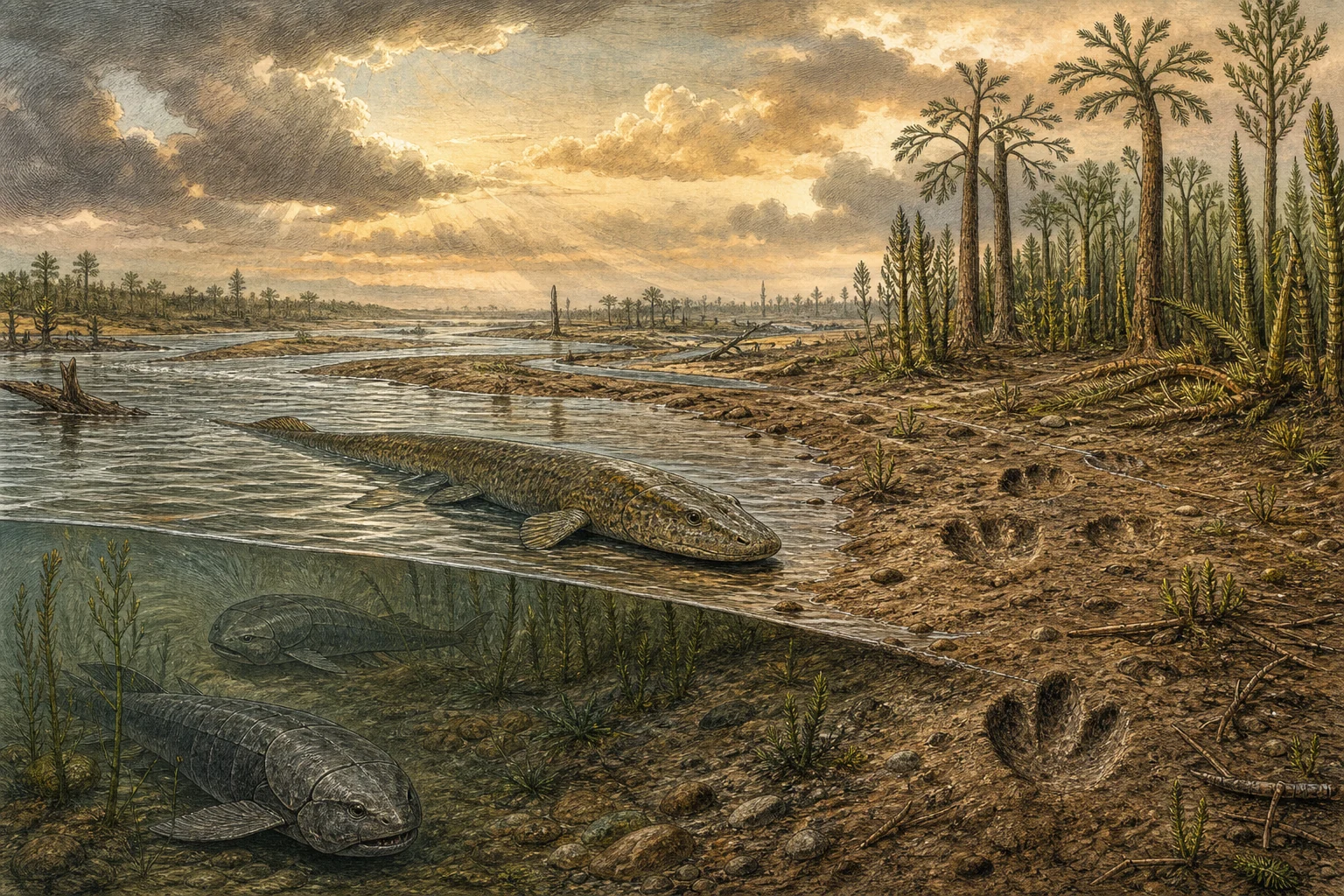
Late Devonian
Lobe-finned fishes already carried bones homologous to our upper arms, forearms, wrists, and digits. In shallow, oxygen-poor waters, old structures found new uses. Limbs did not appear for a purpose; selection worked with inherited variation.
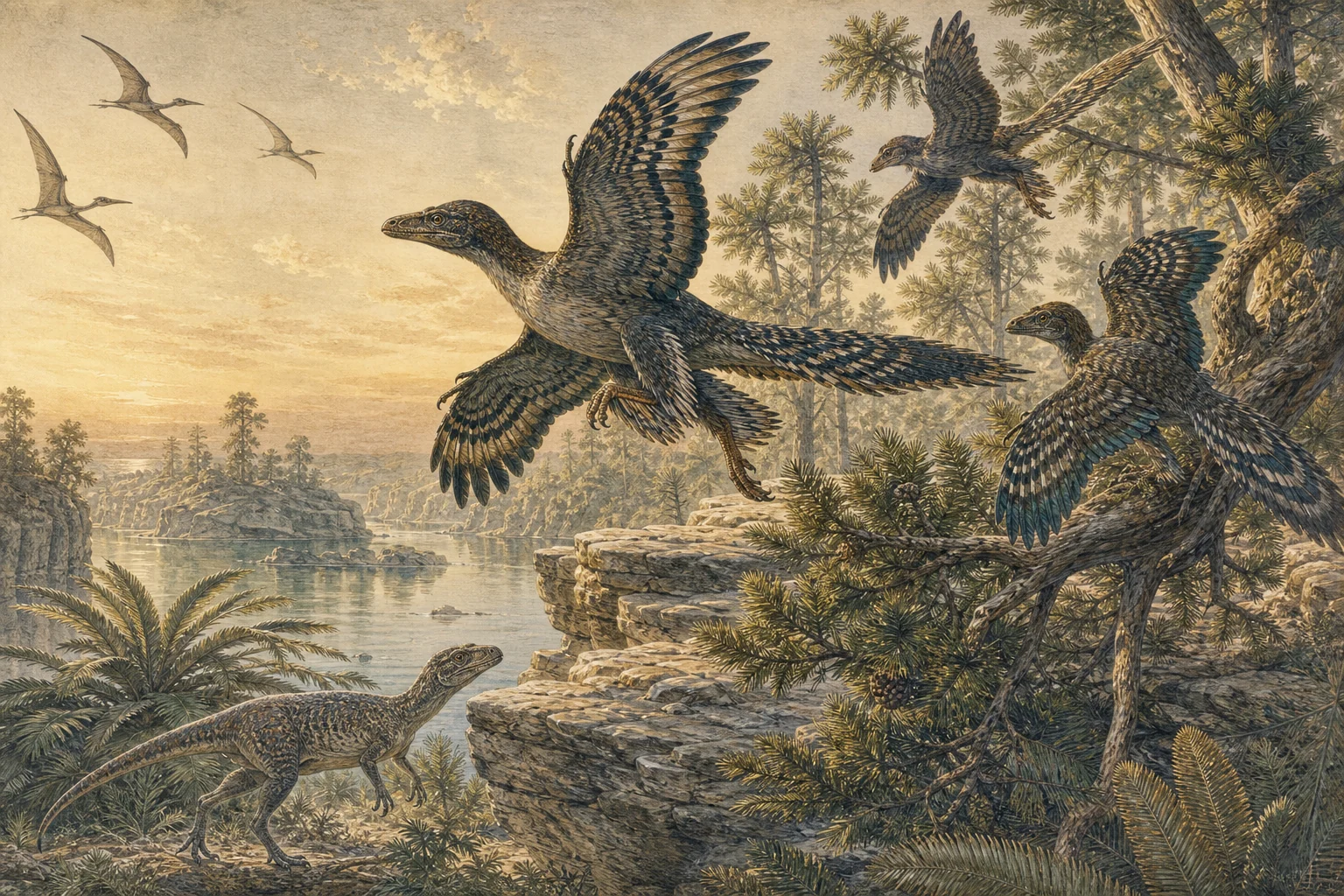
Late Jurassic
Birds are not merely descended from dinosaurs: they are living dinosaurs. Feathers preceded powered flight, serving insulation, display, brooding, and balance before natural selection reshaped them for air.
Populations change because individuals differ, some differences are inherited, and survival and reproduction are unequal. Add time, and small biases can redraw the living world.
Mutation, recombination, development, and environment make individuals unlike one another.
✣Some differences pass between generations through genes and other biological systems.
✣Traits that affect reproductive success can become more or less common in a population.
✣Selection, drift, migration, and isolation accumulate across immense spans of generations.
✣This simplified tree shows relationships, not a march toward humans. Every fork represents a shared ancestral population; every tip is a surviving experiment.
Select a labelled branch. Arrow keys move between visible lineages; Home and End jump to the first or last.
Dates are approximate. A fork represents a population of common ancestors—not a single creature and never a ladder of progress.
No lineage found. Try “feathers”, “tetrapod” or “genome”.
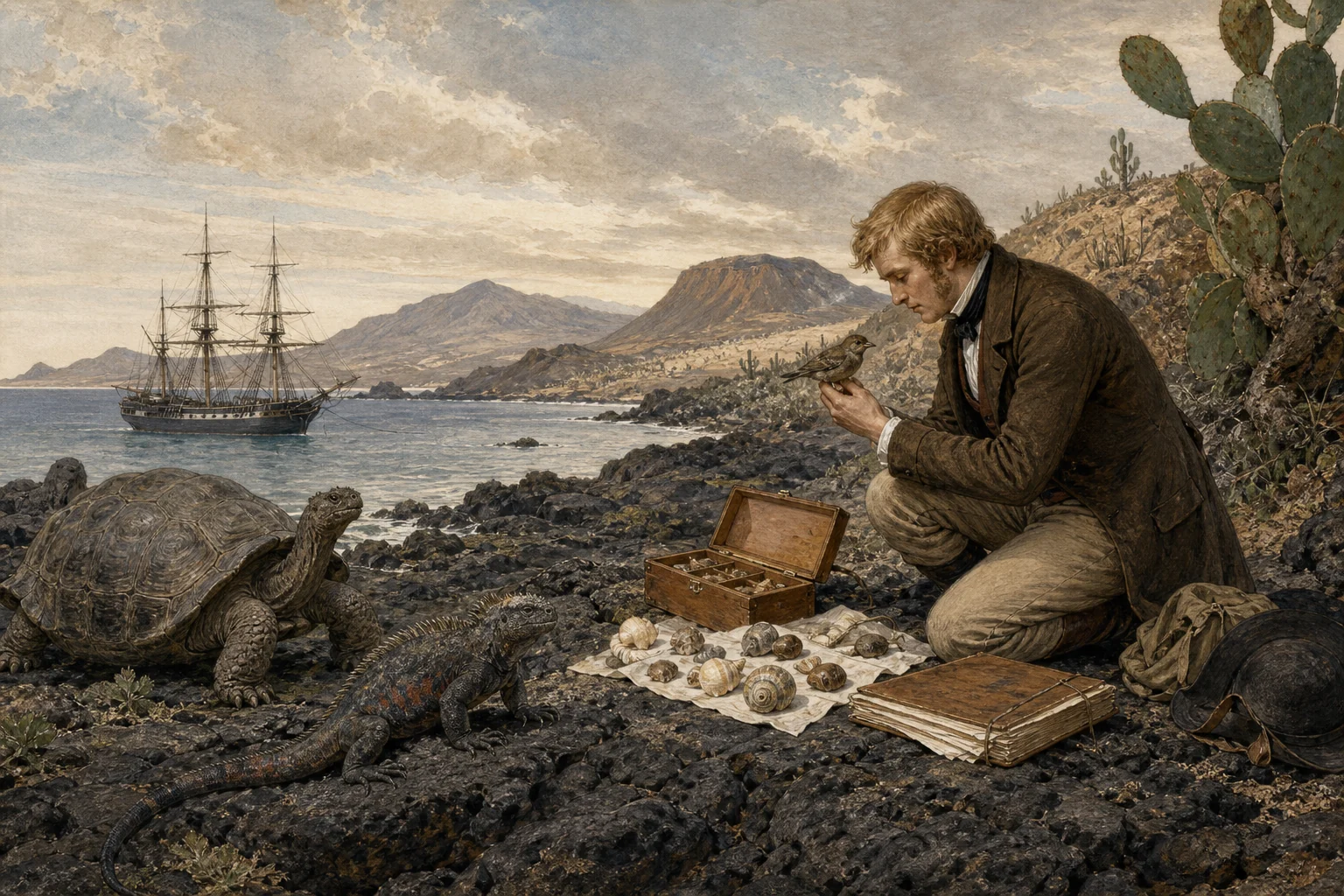
1831–1836 · HMS Beagle
Raised shells high above the sea make Earth’s slow movement visible.
Tropical abundance overwhelms the categories of a young collector.
Giant extinct mammals resemble smaller living South American forms.
Marine fossils in mountains bind deep time to planetary change.
Related forms differ from island to island: place and descent begin to converge.
The voyage ends. The long work of explanation begins.
Twenty-four referenced folios across twelve subjects—every essay paired in English and Portuguese and maintained as an Astro content collection.
12 subjects · 2 languages · one evidence trailHow variation becomes adaptation without foresight, need, or design.
The rock record is incomplete, but its fragments agree with one another.
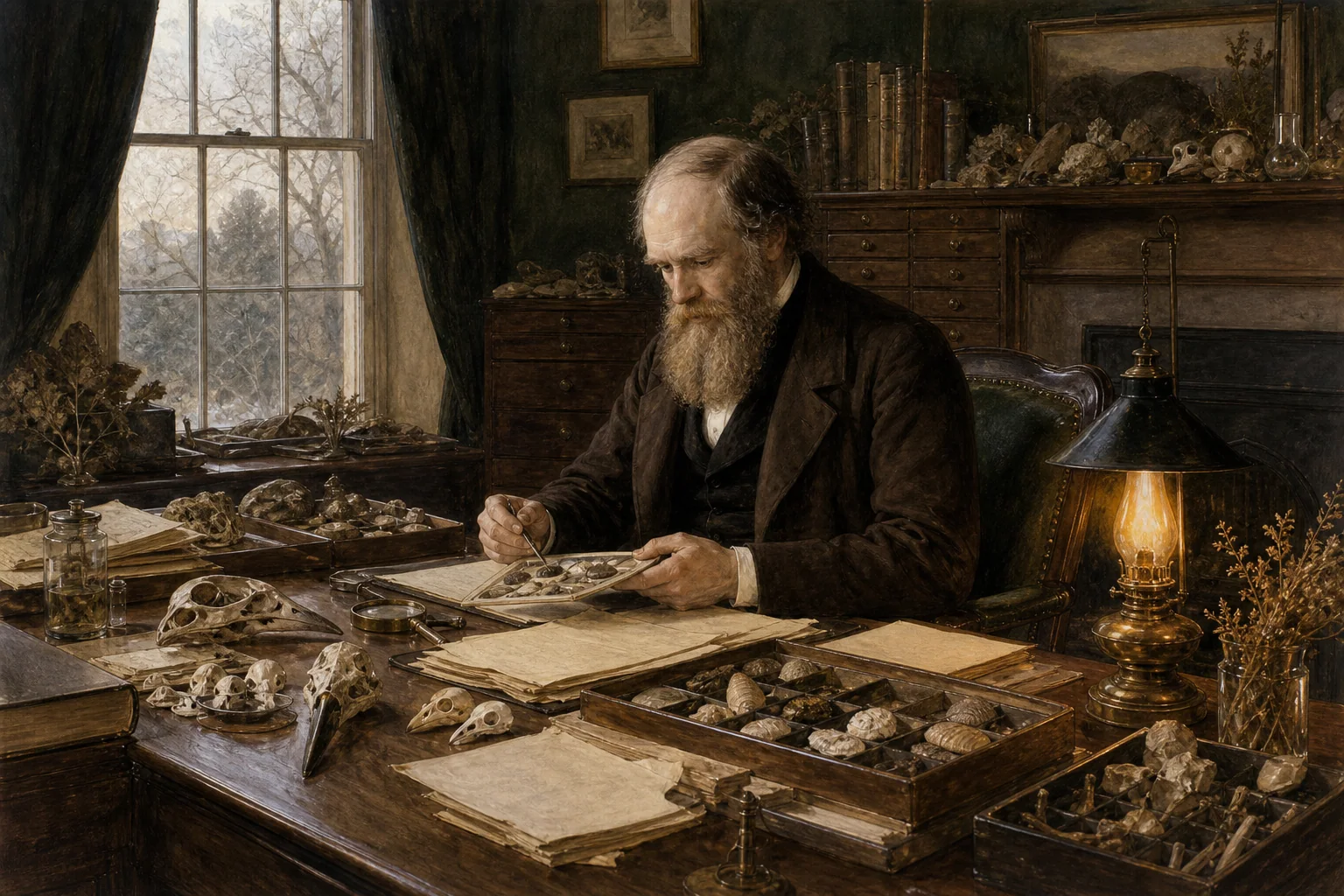
The Beagle supplied observations; comparison and twenty years of work made the theory.
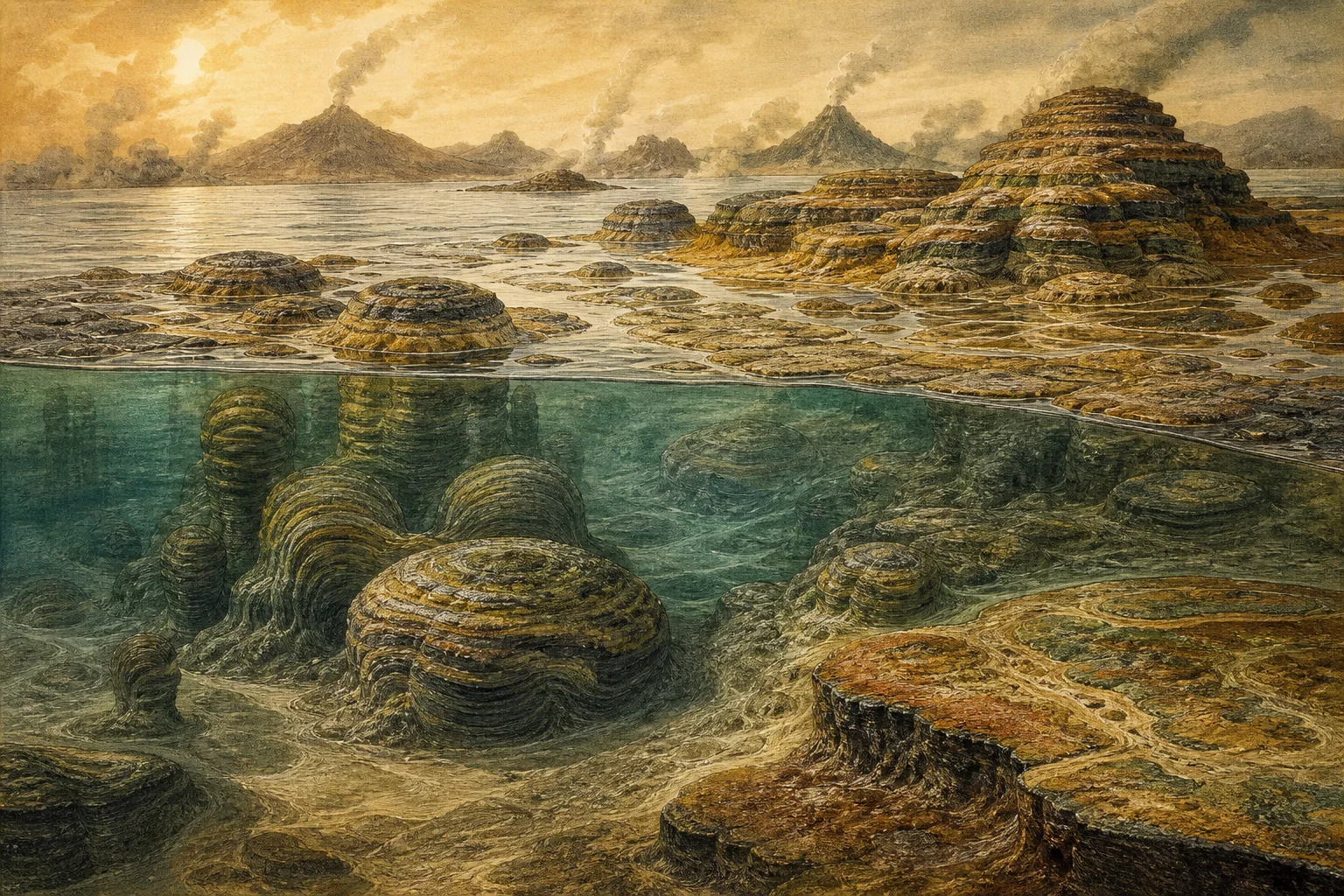
What chemistry, rocks, and living cells can—and cannot—tell us about life's origin.
How microbial metabolisms remade the planet and opened new evolutionary possibilities.
Why animal diversity became conspicuous in stone—and why it was neither instantaneous nor inexplicable.
Fins, limbs, lungs, and the mosaic transition from water to land.
Feathers evolved before birds, and flight assembled from inherited parts.
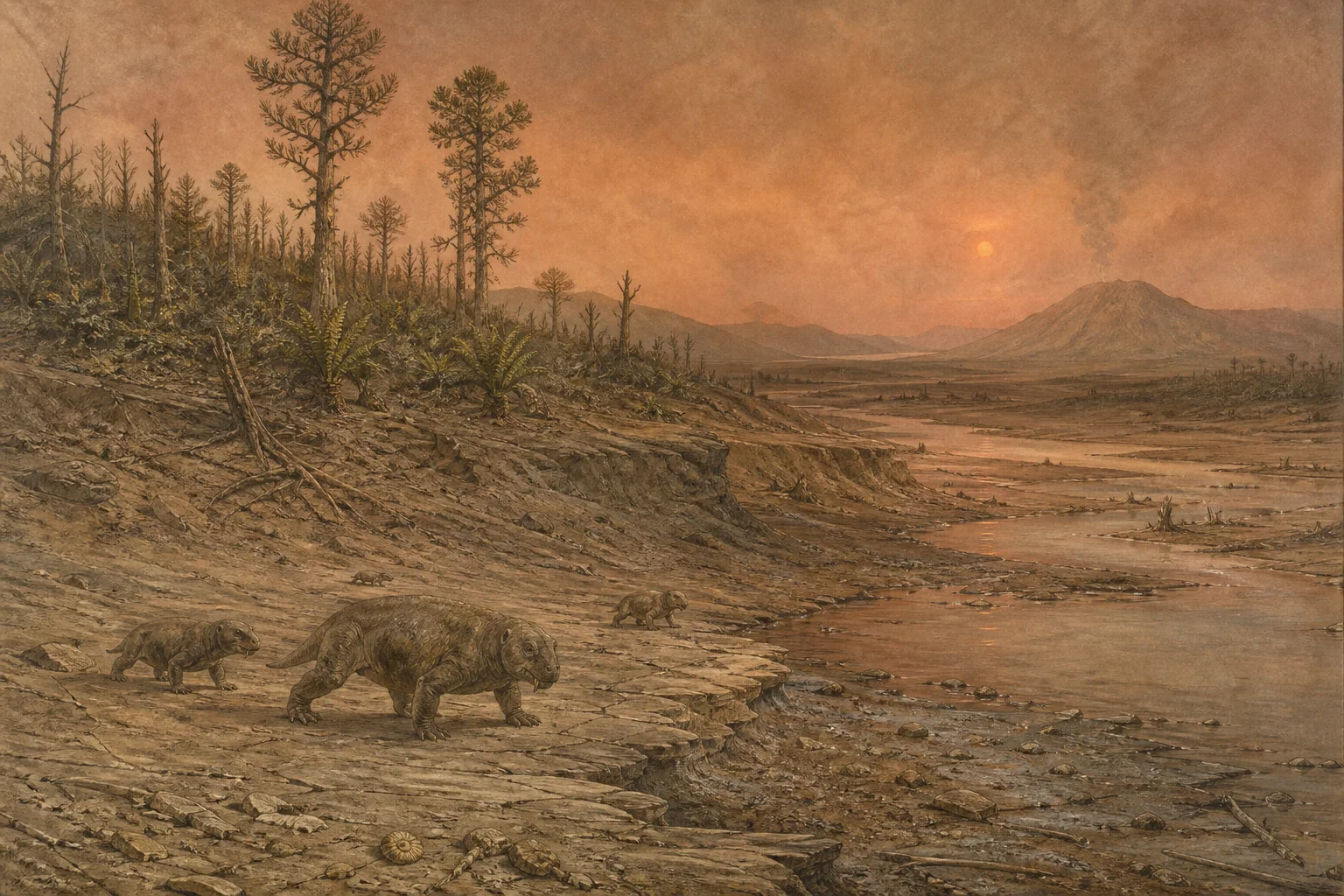
Mass extinctions prune ecosystems selectively; recovery creates a different world.
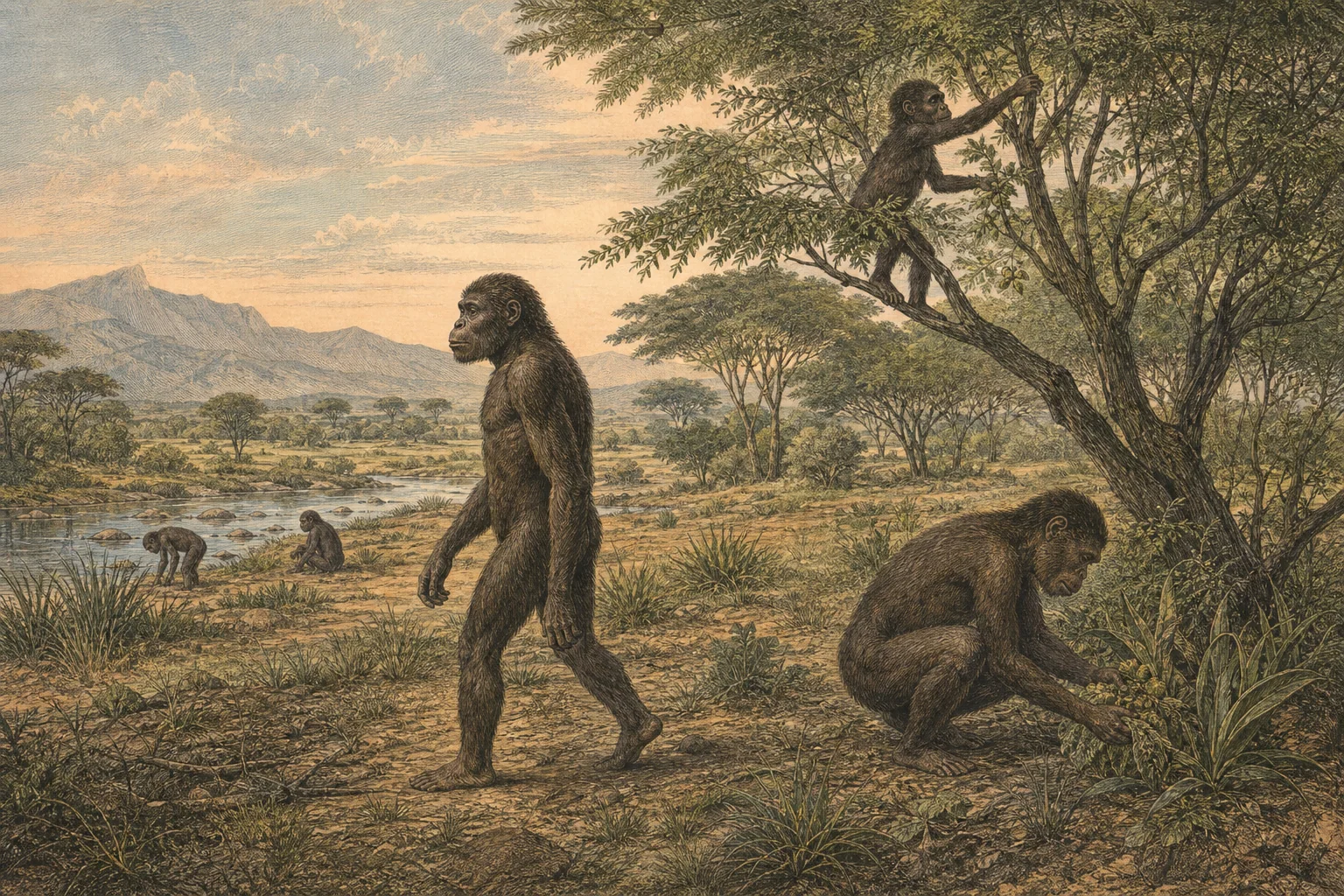
Bipedal apes, multiple Homo lineages, and the African origin of our surviving species.
How inheritance, population mathematics, and DNA extended Darwin's theory.
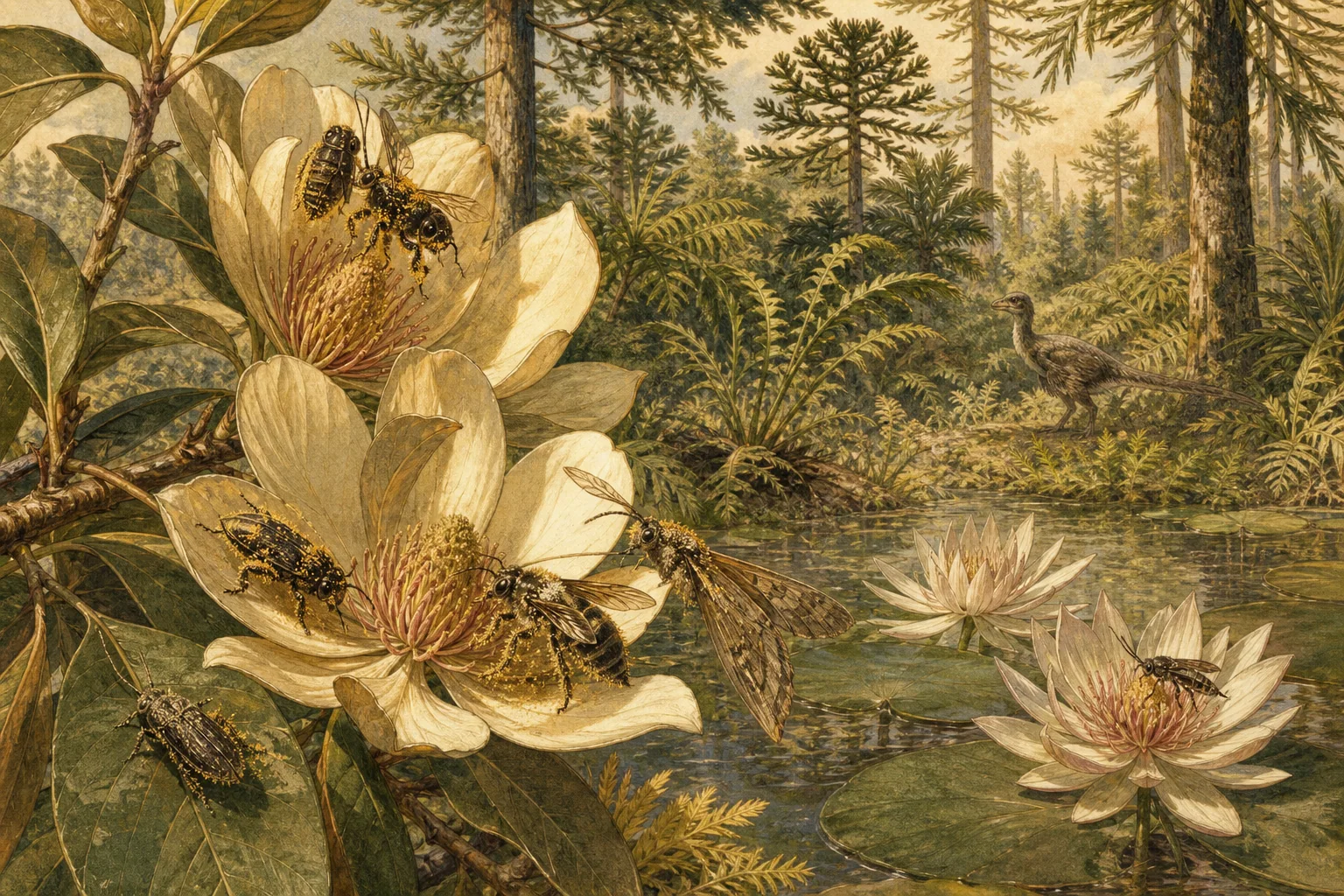
Pollination, parasitism, cooperation, and evolutionary change across interacting lineages.