Atlas chronologicus · 13.8 billion years in twelve plates
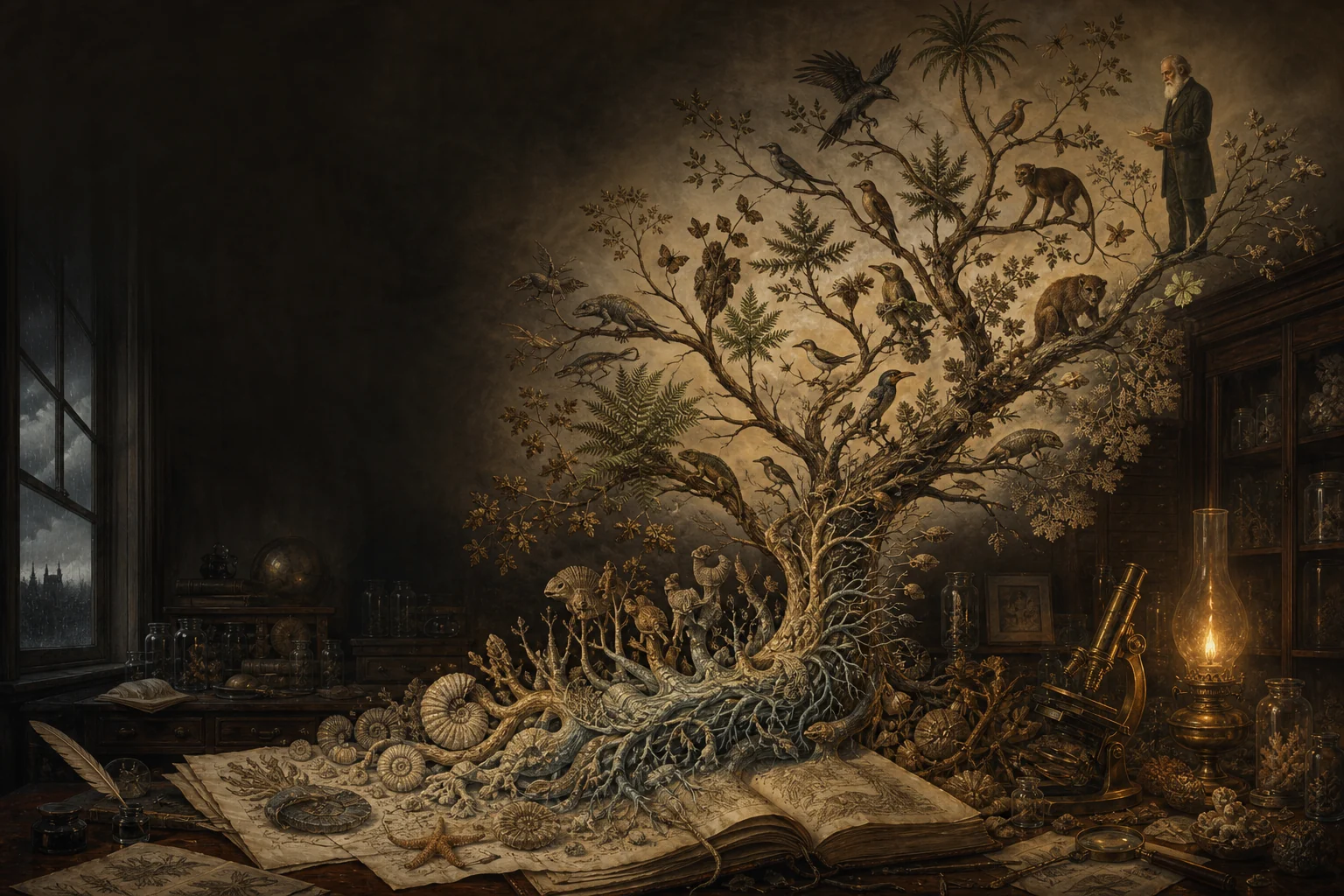
Deep time is not a backdrop. It is the experiment.
Move from cosmic history into biological history. Dates are approximate, boundaries are human conventions, and every reconstruction is a testable interpretation of incomplete evidence.Scroll through the plates ↓
PL. 01
Cosmic preface
Matter learns complexity
Expansion, stars, and stellar death produce the elements from which rocky worlds and living chemistry will later be assembled.Read the evidence ↗
PL. 02
Hadean Earth
A restless planet gathers
Accretion, impacts, differentiation, oceans, and an evolving atmosphere create changing environments—not a finished stage awaiting life.Read the evidence ↗
PL. 03
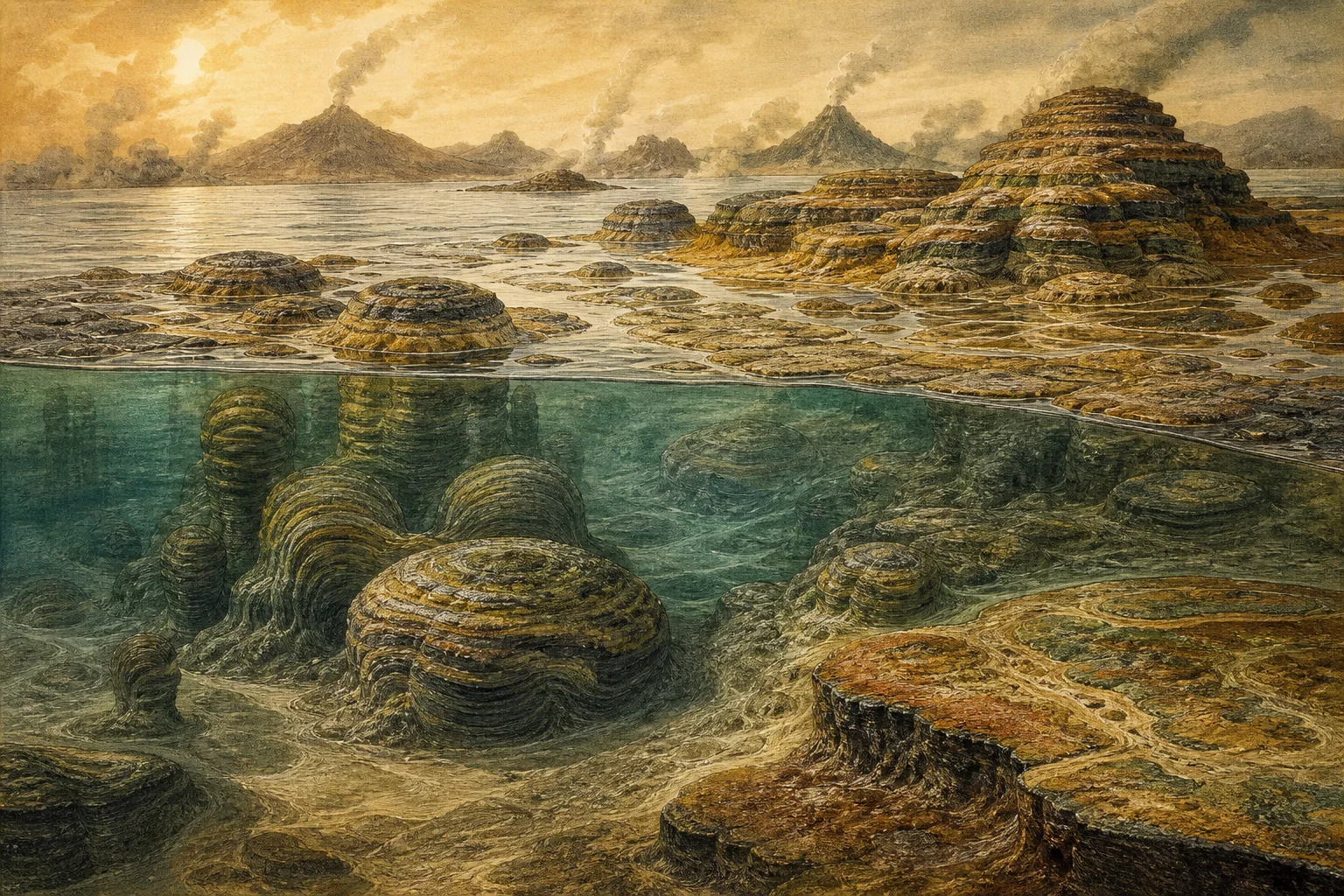
Archean
Life leaves a geological signature
Microbial communities build layered stromatolites. The origin itself lies deeper than the oldest unambiguous traces and remains an open scientific problem.Read the evidence ↗
PL. 04
Great Oxidation Event
Waste becomes a planetary force
Oxygenic photosynthesis changes oceans, minerals, atmosphere, and the selective landscape. Catastrophe for some metabolisms becomes opportunity for others.Read the evidence ↗
PL. 05
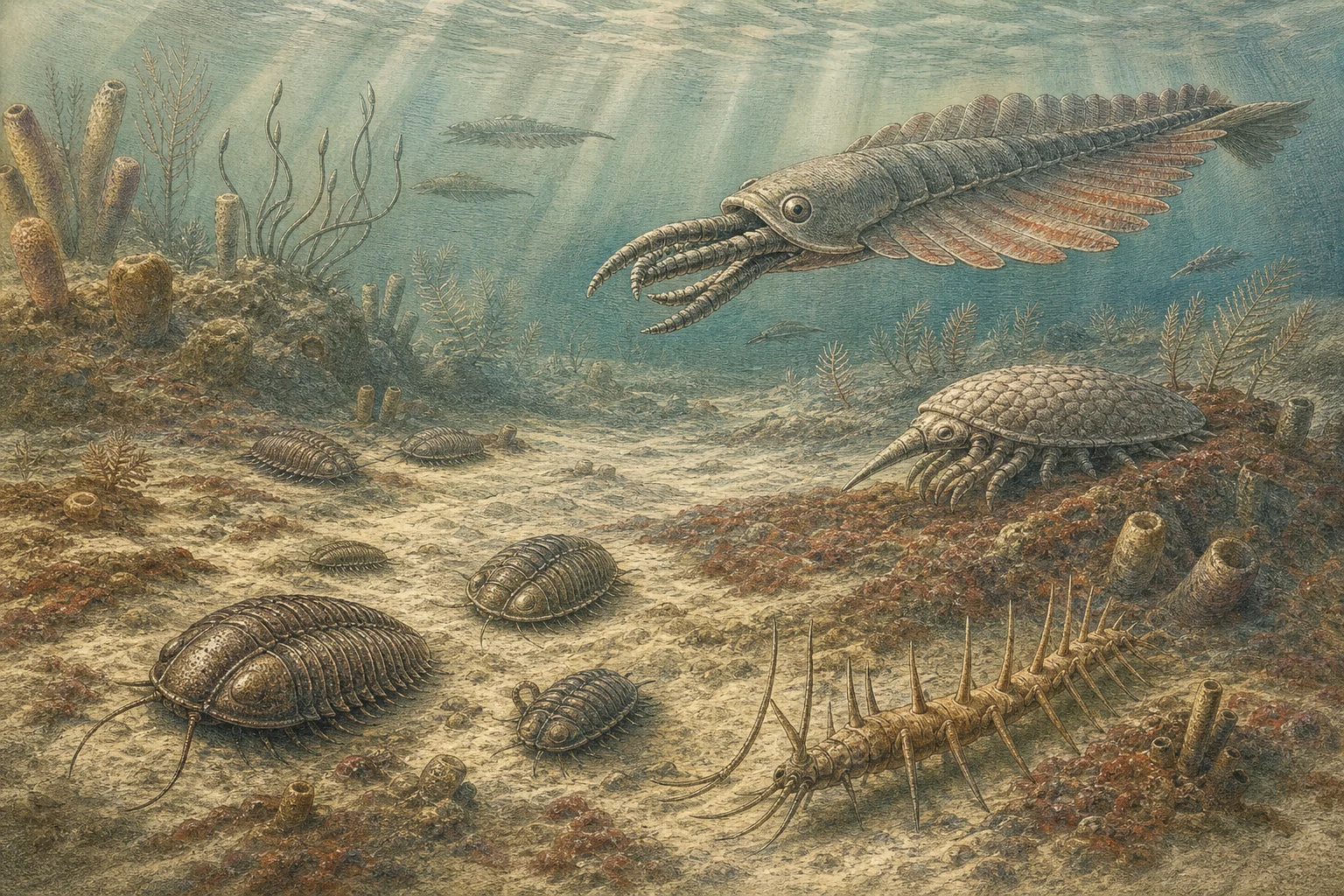
Cambrian
Animal ecologies thicken
Predation, burrowing, vision, armor, and new developmental possibilities transform marine ecosystems during a geologically rapid radiation.Read the evidence ↗
PL. 06
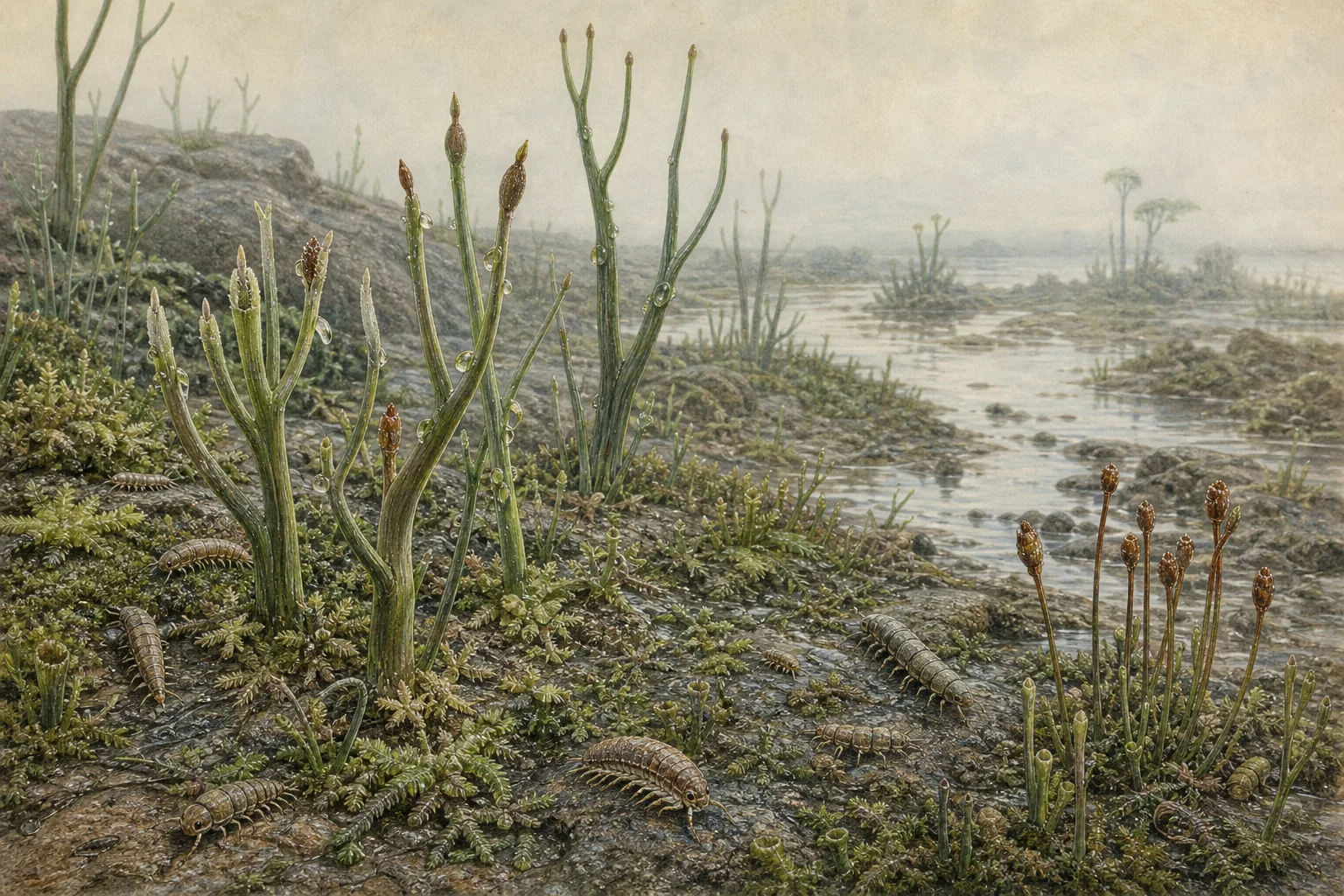
Silurian–Devonian
Green life alters the continents
Small plants, fungi, and arthropods establish terrestrial systems. Soils deepen, weathering changes, and new food webs begin close to the ground.Read the evidence ↗
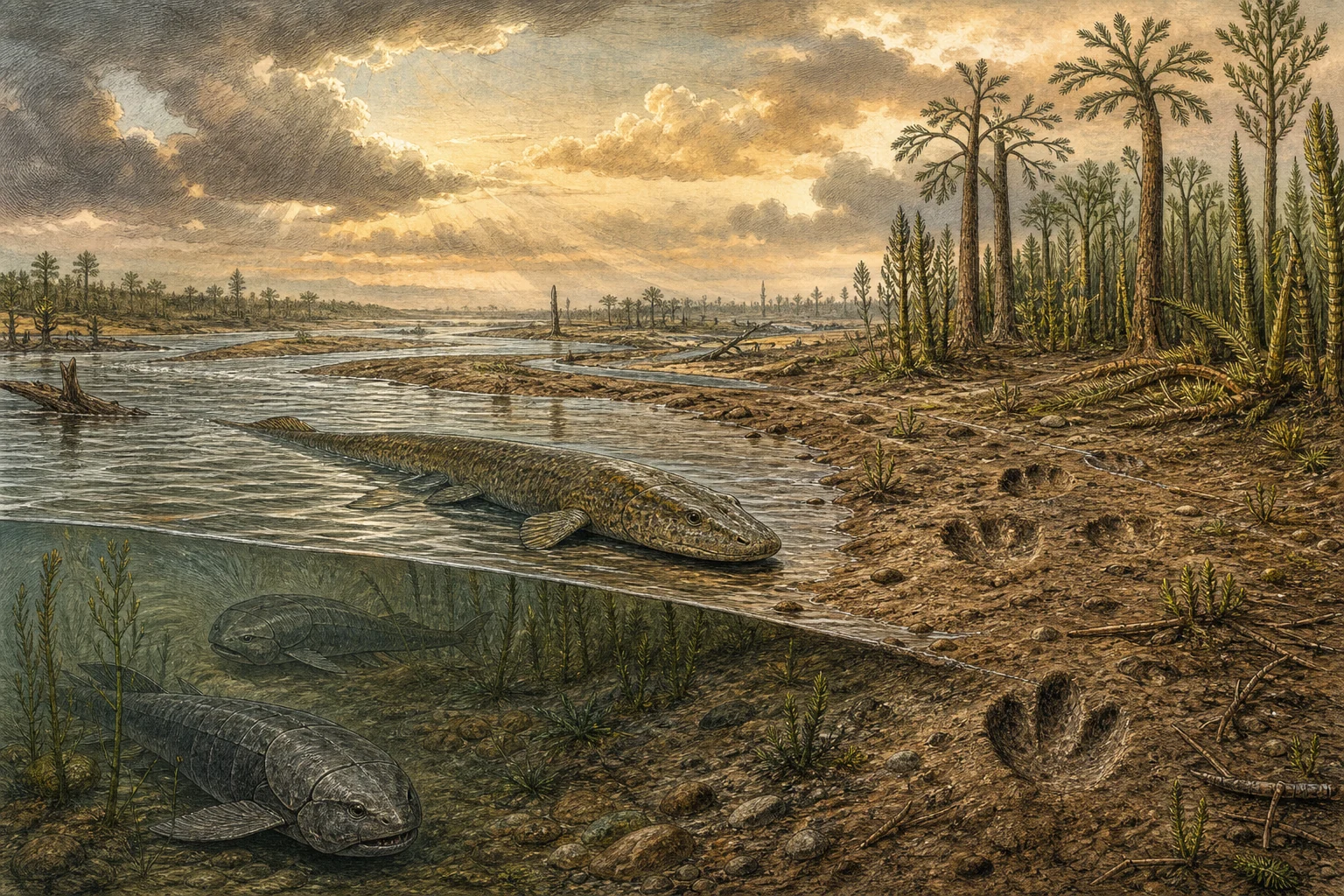
PL. 07
Late Devonian
Fins inherit a shoreline
Tetrapod origins are a branching transition among aquatic vertebrates. Limbs, lungs, senses, and locomotion change in mosaics—not all at once.Read the evidence ↗
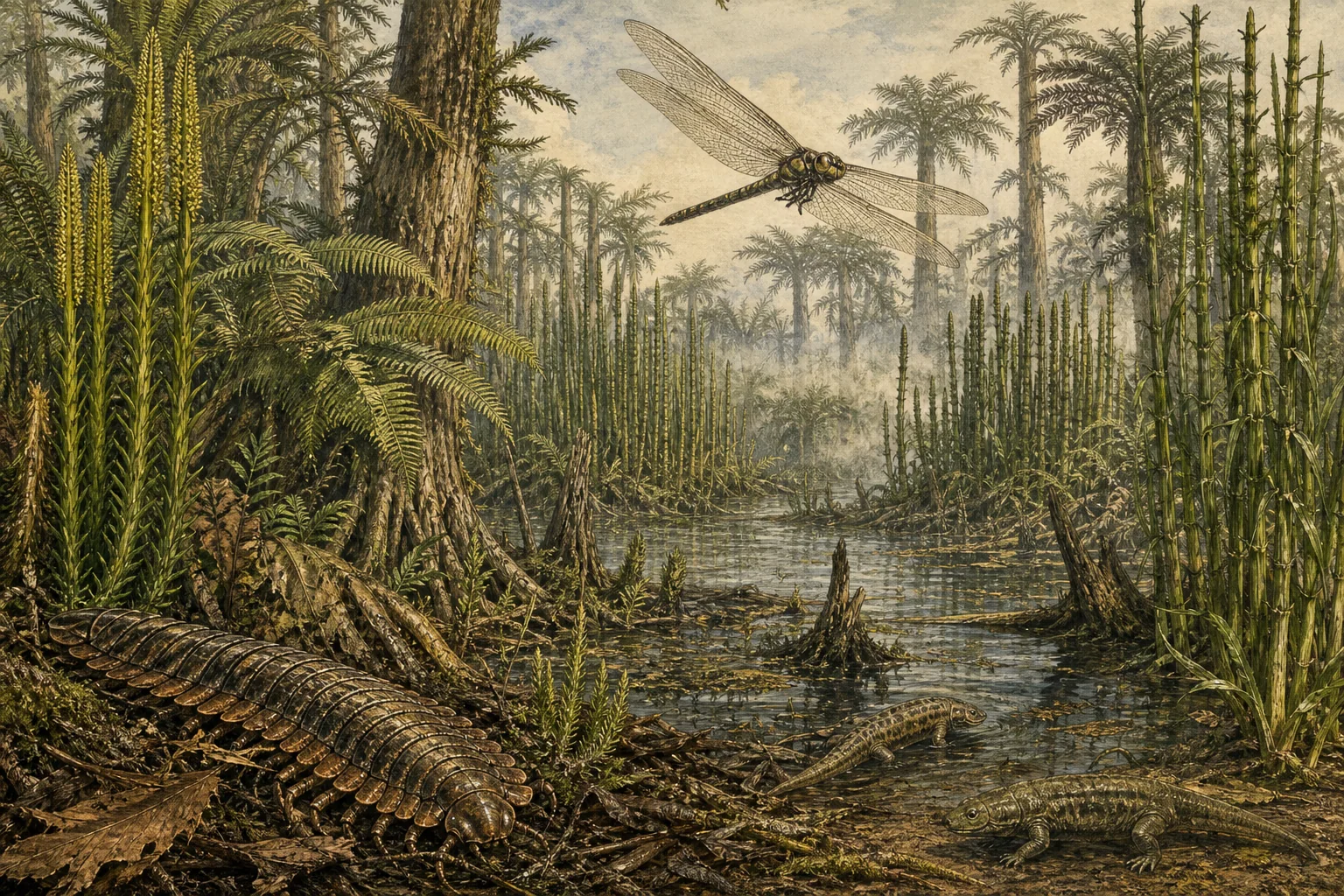
PL. 08
Carboniferous
Forests write carbon into stone
Vast wetlands support giant arthropods, diverse amphibians, and early amniotes while buried plant matter begins its long conversion into coal.Read the evidence ↗
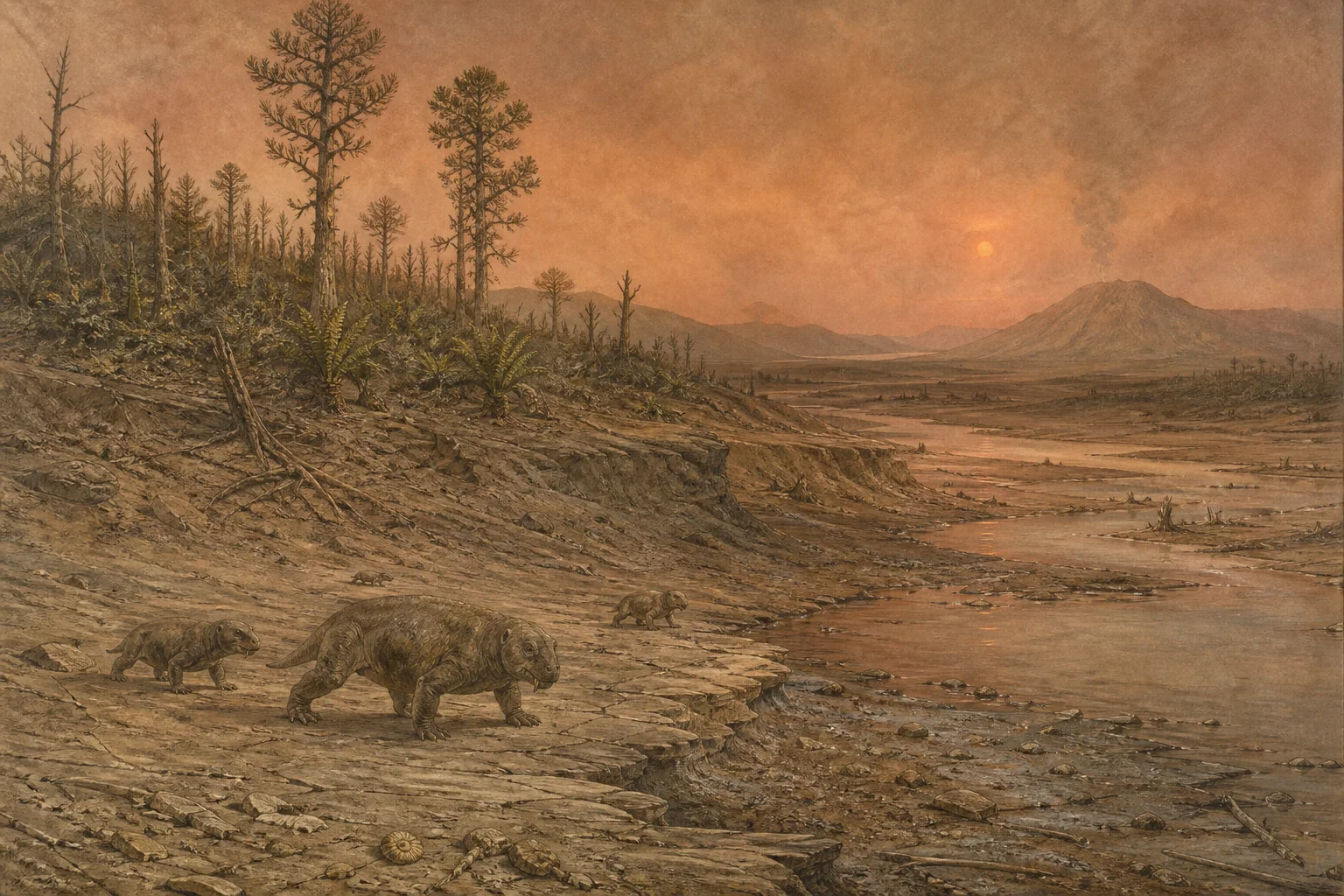
PL. 09
End-Permian crisis
The tree is violently pruned
Warming, ocean deoxygenation, acidification, and cascading disruption erase most marine species and reshape terrestrial ecosystems.Read the evidence ↗
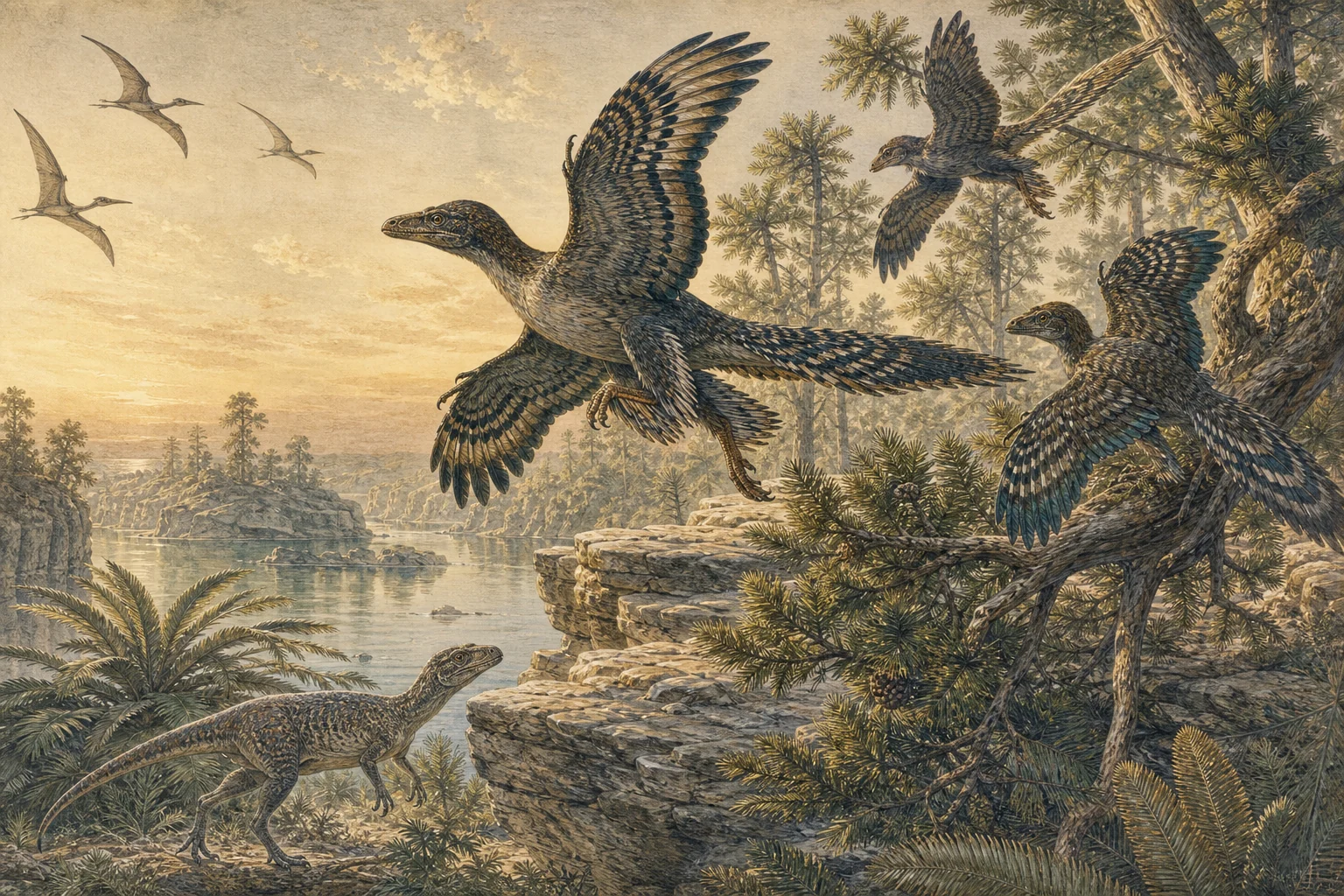
PL. 10
Late Jurassic
Feathers inherit the air
Birds arise within feathered theropod dinosaurs. Flight assembles from inherited structures that already served insulation, display, brooding, and balance.Read the evidence ↗
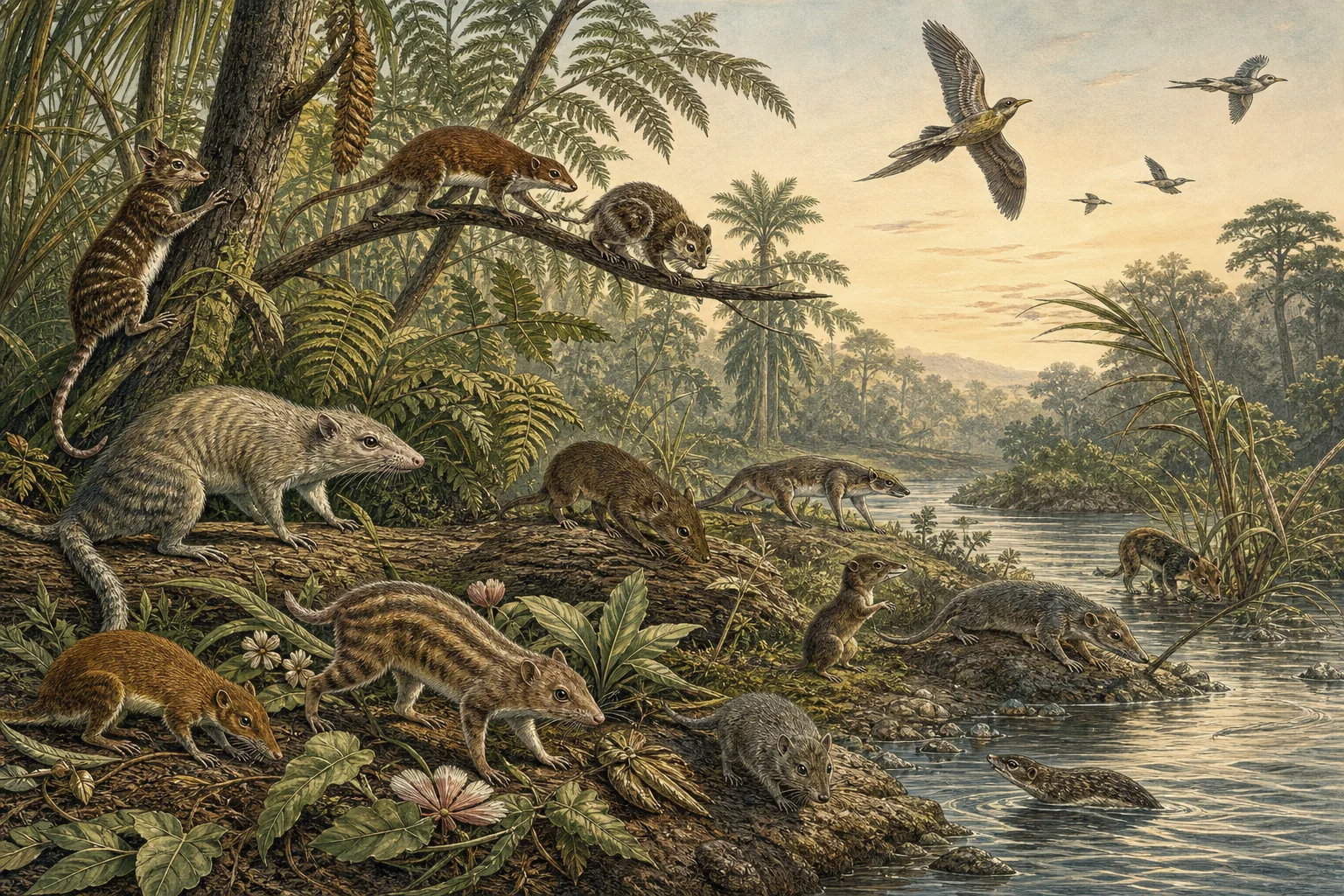
PL. 11
Early Paleogene
Survivors explore emptied worlds
After the end-Cretaceous impact, surviving birds and mammals diversify through ecological opportunity, contingency, competition, and inherited constraint.Read the evidence ↗
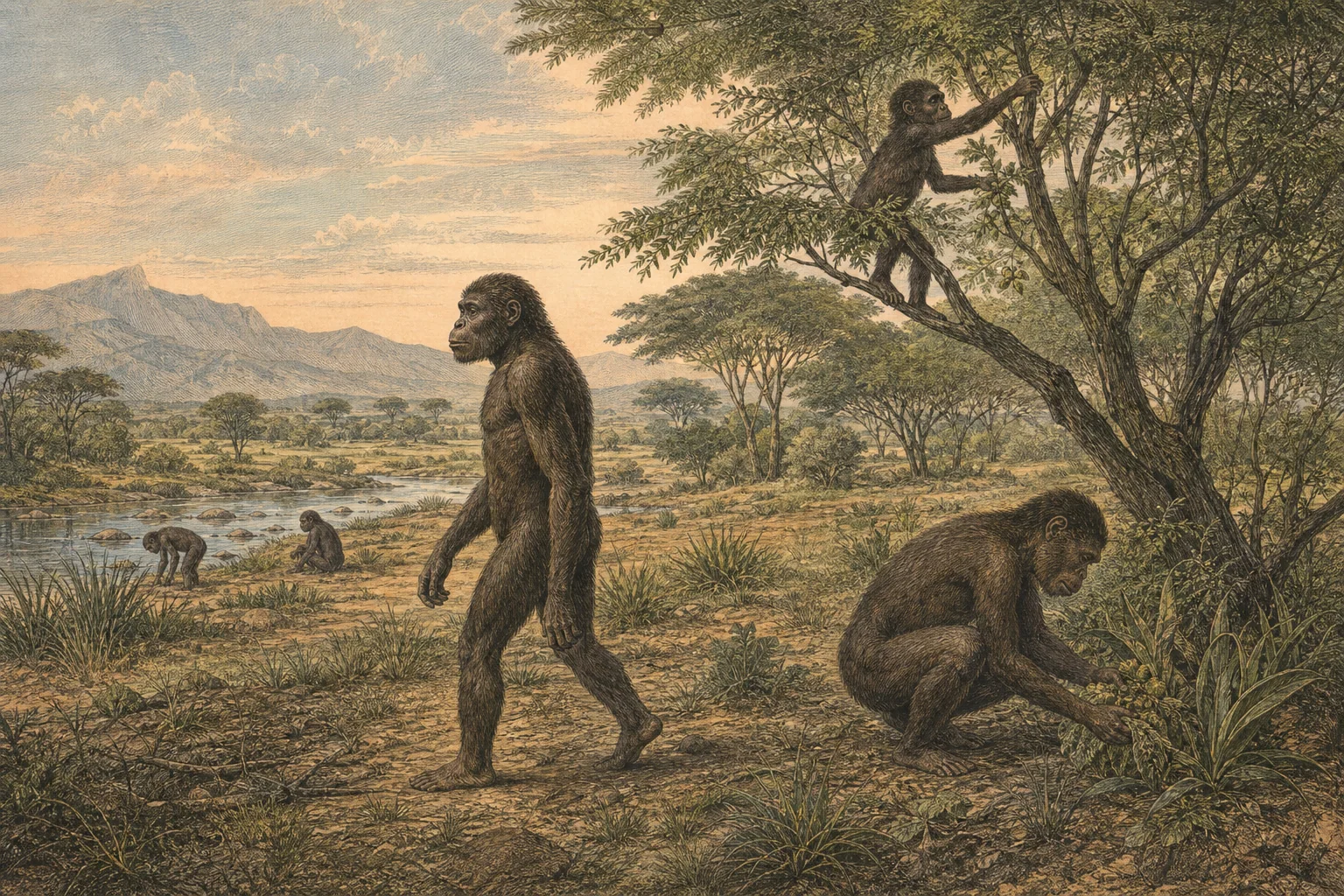
PL. 12
Human family
One ape lineage reads the record
Bipedalism, tool traditions, migration, interbreeding, and culture unfold across many hominin populations. Homo sapiens is the lone surviving twig, not the goal.Read the evidence ↗